 01494 862168
  mailorder@standrewsbookshop.co.uk
OUR PRICE
£12.99
1 in stock
Additional information
| Weight | 100g |
|---|---|
| Format | Paperback |
| Publisher | Oxford University Press |
| Publication Date | 11/06/2015 |
A Washington Post bestseller While the world has made encouraging strides in the fight against global poverty, there is a hidden crisis silently undermining our best efforts to help the poor. It is a plague of everyday violence. Beneath the surface of the world’s poorest communities, common violence – like rape, forced labor, illegal detention, land theft, police abuse and other brutality – has become routine and relentless. And like a horde of locusts devouring everything in their path, the unchecked plague of violence ruins lives, blocks the road out of poverty, and undercuts development. How has this plague of violence grown so ferocious? The answer is terrifying, and startlingly simple: There’s nothing shielding the poor from violent people.
Show More
A Washington Post bestseller While the world has made encouraging strides in the fight against global poverty, there is a hidden crisis silently undermining our best efforts to help the poor. It is a plague of everyday violence. Beneath the surface of the world’s poorest communities, common violence – like rape, forced labor, illegal detention, land theft, police abuse and other brutality – has become routine and relentless. And like a horde of locusts devouring everything in their path, the unchecked plague of violence ruins lives, blocks the road out of poverty, and undercuts development. How has this plague of violence grown so ferocious? The answer is terrifying, and startlingly simple: There’s nothing shielding the poor from violent people. In one of the most remarkable – and unremarked upon – social disasters of the last half century, basic public justice systems in the developing world have descended into a state of utter collapse. Gary A. Haugen and Victor Boutros offer a searing account of how we got here – and what it will take to end the plague. Filled with vivid real-life stories and startling new data, The Locust Effect is a gripping journey into the streets and slums where fear is a daily reality for billions of the world’s poorest ,where safety is secured only for those with money, and where much of our well-intended aid is lost in the daily chaos of violence. While their call to action is urgent, Haugen and Boutros provide hope, a real solution and an ambitious way forward. The Locust Effect is a wake-up call: Its massive implications will forever change the way we understand global poverty – and will help secure a safe path to prosperity for the global poor in the 21st century.
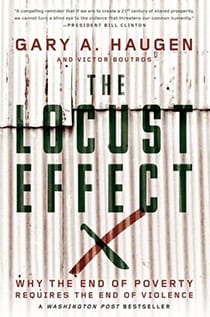
A Washington Post bestseller While the world has made encouraging strides in the fight against global poverty, there is a hidden crisis silently undermining our best efforts to help the poor. It is a plague of everyday violence. Beneath the surface of the world’s poorest communities, common violence – like rape, forced labor, illegal detention, land theft, police abuse and other brutality – has become routine and relentless. And like a horde of locusts devouring everything in their path, the unchecked plague of violence ruins lives, blocks the road out of poverty, and undercuts development. How has this plague of violence grown so ferocious? The answer is terrifying, and startlingly simple: There’s nothing shielding the poor from violent people.
Find out more
A Washington Post bestseller While the world has made encouraging strides in the fight against global poverty, there is a hidden crisis silently undermining our best efforts to help the poor. It is a plague of everyday violence. Beneath the surface of the world’s poorest communities, common violence – like rape, forced labor, illegal detention, land theft, police abuse and other brutality – has become routine and relentless. And like a horde of locusts devouring everything in their path, the unchecked plague of violence ruins lives, blocks the road out of poverty, and undercuts development. How has this plague of violence grown so ferocious? The answer is terrifying, and startlingly simple: There’s nothing shielding the poor from violent people. In one of the most remarkable – and unremarked upon – social disasters of the last half century, basic public justice systems in the developing world have descended into a state of utter collapse. Gary A. Haugen and Victor Boutros offer a searing account of how we got here – and what it will take to end the plague. Filled with vivid real-life stories and startling new data, The Locust Effect is a gripping journey into the streets and slums where fear is a daily reality for billions of the world’s poorest ,where safety is secured only for those with money, and where much of our well-intended aid is lost in the daily chaos of violence. While their call to action is urgent, Haugen and Boutros provide hope, a real solution and an ambitious way forward. The Locust Effect is a wake-up call: Its massive implications will forever change the way we understand global poverty – and will help secure a safe path to prosperity for the global poor in the 21st century.
OUR PRICE:
£12.99
1 in stock
A Washington Post bestseller While the world has made encouraging strides in the fight against global poverty, there is a hidden crisis silently undermining our best efforts to help the poor. It is a plague of everyday violence. Beneath the surface of the world’s poorest communities, common violence – like rape, forced labor, illegal detention, land theft, police abuse and other brutality – has become routine and relentless. And like a horde of locusts devouring everything in their path, the unchecked plague of violence ruins lives, blocks the road out of poverty, and undercuts development. How has this plague of violence grown so ferocious? The answer is terrifying, and startlingly simple: There’s nothing shielding the poor from violent people.
Show More
A Washington Post bestseller While the world has made encouraging strides in the fight against global poverty, there is a hidden crisis silently undermining our best efforts to help the poor. It is a plague of everyday violence. Beneath the surface of the world’s poorest communities, common violence – like rape, forced labor, illegal detention, land theft, police abuse and other brutality – has become routine and relentless. And like a horde of locusts devouring everything in their path, the unchecked plague of violence ruins lives, blocks the road out of poverty, and undercuts development. How has this plague of violence grown so ferocious? The answer is terrifying, and startlingly simple: There’s nothing shielding the poor from violent people. In one of the most remarkable – and unremarked upon – social disasters of the last half century, basic public justice systems in the developing world have descended into a state of utter collapse. Gary A. Haugen and Victor Boutros offer a searing account of how we got here – and what it will take to end the plague. Filled with vivid real-life stories and startling new data, The Locust Effect is a gripping journey into the streets and slums where fear is a daily reality for billions of the world’s poorest ,where safety is secured only for those with money, and where much of our well-intended aid is lost in the daily chaos of violence. While their call to action is urgent, Haugen and Boutros provide hope, a real solution and an ambitious way forward. The Locust Effect is a wake-up call: Its massive implications will forever change the way we understand global poverty – and will help secure a safe path to prosperity for the global poor in the 21st century.
Additional information
| Weight | 100g |
|---|---|
| Format | Paperback |
| Publisher | Oxford University Press |
| Publication Date | 11/06/2015 |

-
Sale!

Will I Be Bald In Heaven?
Original price was: £9.99.£7.99Current price is: £7.99. -
Sale!

Spirit Filled Churches
£12.99£9.99 -
Sale!

After Amen: 50 Days of Poetry and Prayer | HB
Original price was: £16.99.£13.99Current price is: £13.99. -
Sale!

How to Hear God: A Guide for Young Explorers
Original price was: £12.99.£10.99Current price is: £10.99. -
Sale!

Small Steps for Big Change
Original price was: £16.99.£11.99Current price is: £11.99. -

Spark: Ignite Your God-Given Creativity
£12.99 -
Sale!

A Knock at the Door | PB
Original price was: £10.99.£8.99Current price is: £8.99. -
Sale!

My Story, John C Lennox
Original price was: £24.99.£19.99Current price is: £19.99. -
Sale!
The Greatest Story Ever Told: An Eyewitness Account
Original price was: £14.99.£9.99Current price is: £9.99. -
Sale!

Practicing the Way
Original price was: £19.99.£16.99Current price is: £16.99.


